
🟦 Abstract
Selecting the right ring binder mechanism is one of the most important decisions when developing binders, planners, presentation folders, and office stationery products. The wrong mechanism may result in poor document compatibility, insufficient capacity, reduced durability, or higher production costs. This guide explains the key factors buyers should consider when selecting a ring binder mechanism and provides practical recommendations based on the manufacturing experience of Foshan Jinxinyu Hardware Products Co., Ltd.
1. Introduction
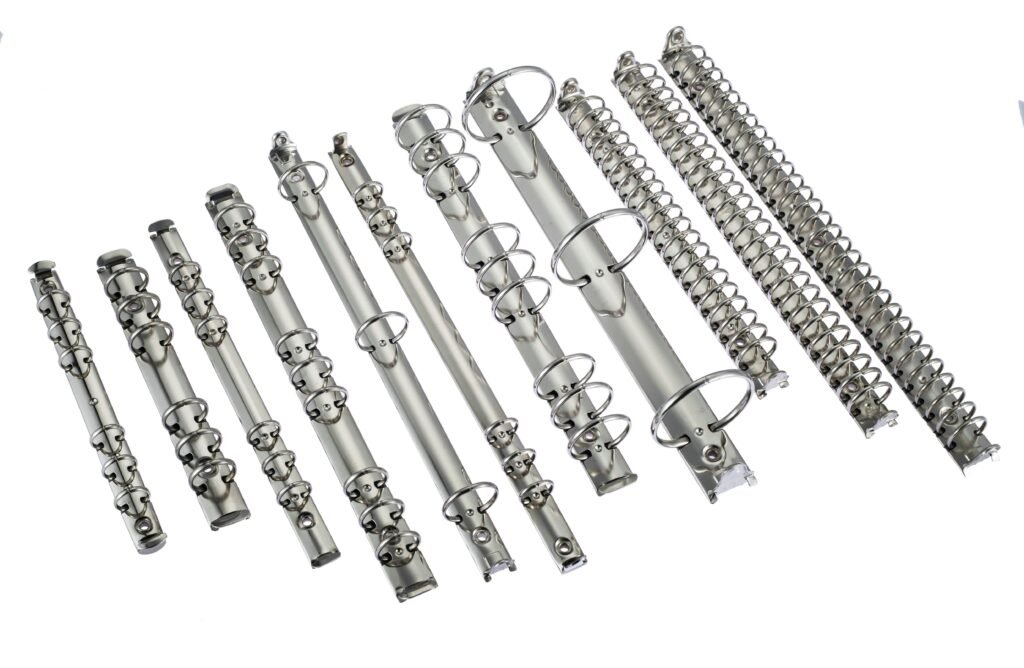
A ring binder mechanism is the core functional component of a binder. It determines document capacity, ease of use, durability, and compatibility with the binder cover.
When choosing a mechanism, buyers should evaluate more than just ring diameter. Factors such as ring shape, base length, hole spacing, material, and surface finish all affect product performance.
Selecting the correct mechanism at the design stage helps avoid costly modifications during production.
2. Understand Your Product Application
Different products require different binder mechanisms.
Typical Applications
| Product Type | Recommended Mechanism |
| Office binders | O Ring / D Ring |
| School binders | O Ring |
| Presentation folders | Slant D Ring |
| Training manuals | D Ring |
| Premium planners | Compact O Ring |
| Archival binders | Large D Ring |
Choosing a mechanism that matches the intended application improves usability and customer satisfaction.
3. Choose the Correct Ring Shape
The shape of the ring affects storage efficiency and page-turning performance.
Ring Shape Comparison
| Ring Shape | Advantages | Typical Use |
| O Ring | Simple and economical | General office use |
| D Ring | Larger effective capacity | Office and archives |
| Slant D Ring | Better page alignment | Presentation binders |
| Q Ring | Maximum capacity | Premium filing systems |
Technical Reference
According to the Foshan Jinxinyu Hardware Product Catalog, D Ring and Slant D Ring mechanisms provide better document alignment when handling larger paper volumes.
Source: Foshan Jinxinyu Hardware Product Catalog
4. Select the Appropriate Ring Diameter
Ring diameter determines document capacity.
Capacity Guide
| Ring Diameter | Approximate Capacity* |
| 20 mm | 100–150 sheets |
| 25 mm | 150–200 sheets |
| 30 mm | 200–250 sheets |
| 38 mm | 250–300 sheets |
| 50 mm | 400–500 sheets |
*Actual capacity varies depending on paper thickness and inserted materials.
It is recommended to leave additional capacity for future document expansion.
5. Confirm Base Length and Hole Spacing
Many buyers focus only on ring diameter while overlooking other important dimensions.
Dimensions That Must Be Verified
| Dimension | Importance |
| Base Length | Matches binder spine width |
| Hole Spacing | Matches paper punching pattern |
| Number of Rings | Determines compatibility |
| Mechanism Height | Affects binder thickness |
Incorrect dimensions often result in assembly problems.
6. Select the Right Material
Material quality directly influences durability.
Common Materials
| Material | Characteristics |
| Carbon Steel | Cost-effective |
| Nickel-Plated Steel | Good appearance and corrosion resistance |
| Stainless Steel | Excellent corrosion resistance |
| Spring Steel | High elasticity |
High-quality materials improve long-term performance and reduce maintenance issues.
Technical Reference
According to Foshan Jinxinyu Hardware Products Co., Ltd., selecting suitable steel grades and spring materials is essential for ensuring stable mechanical performance throughout the product’s service life.
Source: Foshan Jinxinyu Internal Technical Guidelines
7. Choose an Appropriate Surface Finish
Surface treatment protects the mechanism from corrosion while enhancing its appearance.
Common Finishes
| Finish | Features |
| Nickel Plating | Bright, durable, economical |
| Matte Nickel | Premium appearance |
| Chrome Plating | High gloss and wear resistance |
| Powder Coating | Color customization |
The choice of finish should reflect both product positioning and environmental conditions.
8. Consider OEM Customization Requirements
OEM projects often require more than standard specifications.
Common Customization Options
| Item | Customization |
| Ring Diameter | Customized capacity |
| Ring Quantity | 2, 3, 4, or more rings |
| Base Length | Customized dimensions |
| Surface Finish | Multiple finishes available |
| Logo | Private branding |
| Packaging | OEM packaging solutions |
Discussing customization requirements early helps reduce production time and development costs.
9. Evaluate Supplier Capabilities
Choosing the right manufacturer is as important as choosing the right mechanism.
Supplier Evaluation Checklist
| Evaluation Item | Importance |
| Manufacturing Experience | High |
| OEM Development Capability | High |
| Quality Control System | High |
| Sample Availability | High |
| Technical Support | High |
| Delivery Reliability | High |
Working with an experienced manufacturer helps minimize quality risks.
Technical Reference
Based on the OEM development experience of Foshan Jinxinyu Hardware Products Co., Ltd., confirming technical drawings and testing production samples before mass production significantly reduces project risks.
Source: Foshan Jinxinyu OEM Development Procedures
10. Common Mistakes When Selecting a Binder Mechanism
Many procurement problems originate from incorrect specification choices.
Typical Mistakes
Selecting only by ring diameter
Ignoring binder cover dimensions
Choosing the wrong ring shape
Overlooking future capacity needs
Not requesting production samples
Avoiding these mistakes improves both product quality and production efficiency.
11. Why Work with an Experienced OEM Manufacturer?
Experienced manufacturers provide more than production capacity.
They can also assist with:
Product design recommendations
Technical drawing review
Material selection
Sample development
Quality inspection
Production optimization
Foshan Jinxinyu Hardware Products Co., Ltd. supports customers throughout the entire OEM development process, helping transform design concepts into reliable finished products.
12. Conclusion
Selecting the right ring binder mechanism requires careful consideration of application, ring shape, capacity, dimensions, material, surface finish, and supplier capability.
By evaluating these factors before production begins, buyers can improve product quality, reduce procurement risks, and achieve better long-term performance.
Foshan Jinxinyu Hardware Products Co., Ltd. offers a wide range of ring binder mechanisms with flexible OEM customization and free sample support to help customers make informed purchasing decisions.
13. FAQ
Q1: Which ring shape provides the largest capacity?
D Ring and Q Ring generally provide higher effective storage capacity than standard O Rings.
Q2: Is ring diameter the only important specification?
No. Base length, hole spacing, ring quantity, and material are equally important.
Q3: Which surface finish is most commonly used?
Nickel plating remains the most widely used finish for office binder mechanisms.
Q4: Should I request samples before mass production?
Yes. Sample evaluation helps verify compatibility, quality, and functionality.
Q5: Can binder mechanisms be fully customized?
Yes. Ring size, shape, base length, finish, branding, and packaging can all be customized according to OEM requirements.